When your dog or cat develops persistent vomiting, chronic diarrhoea, breathing difficulties, recurrent ear problems, urinary issues, or unexplained weight loss, finding the exact cause can sometimes be challenging. Routine blood tests, X-rays, and ultrasound provide valuable information, but certain conditions require a closer look inside the body.
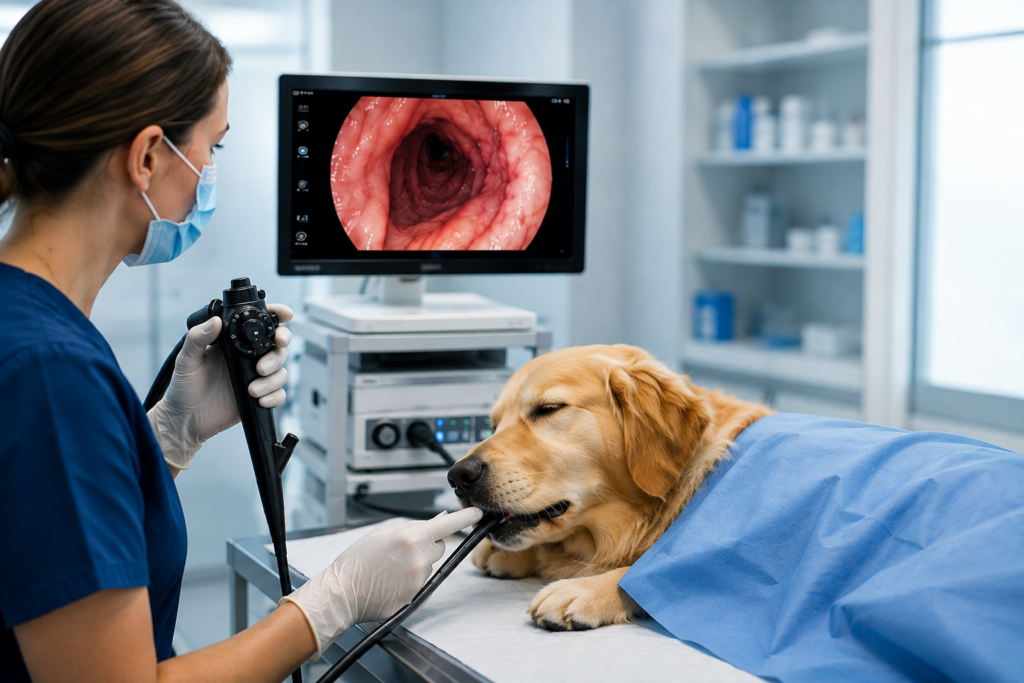
Veterinary endoscopy service is an advanced diagnostic technique that allows veterinarians to examine internal organs using a small camera and specialised equipment. It can provide real-time visualisation of areas that may be difficult to evaluate through conventional diagnostic methods. In selected cases, endoscopy can also allow tissue sampling, biopsy, or removal of certain foreign objects without the need for major surgery.
At Animal Health Pathology Lab (AHPL), our endoscopy service for dogs and cats is designed to support veterinarians with advanced diagnostic technology and clearer visual information for accurate clinical decision-making.
What Is Veterinary Endoscopy?
Endoscopy involves using a specialised instrument called an endoscope, which contains a camera and light source. Depending on the area being examined, the endoscope can be introduced through a natural body opening or, for certain procedures, through a small access point.
The camera provides magnified, real-time images of internal structures on a high-definition monitor. This allows the veterinary team to identify abnormalities such as inflammation, foreign bodies, growths, ulcers, narrowing, tissue changes, or other conditions that may not be clearly identified through external examination.
Because endoscopy is minimally invasive compared with many traditional surgical procedures, it can reduce the need for large incisions in appropriate cases and may allow pets to recover more quickly.
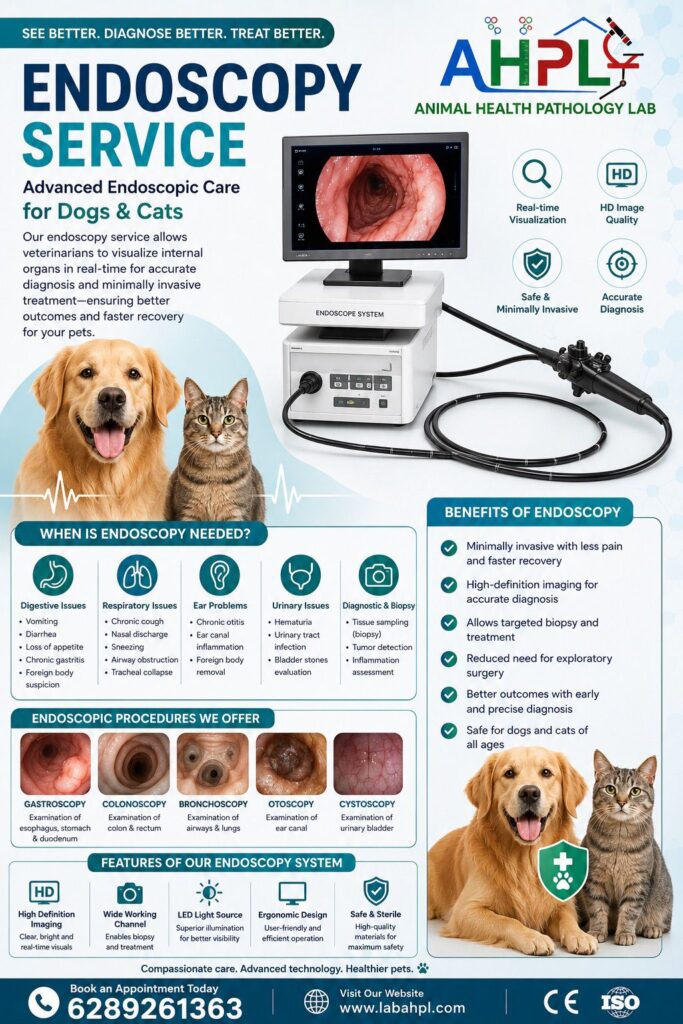
When Is Veterinary Endoscopy Service Recommended for Pets?
Your veterinarian may recommend veterinary endoscopy service when symptoms persist or when conventional diagnostic tests do not provide enough information.
1. Digestive Problems
Endoscopy can be particularly useful when a pet has ongoing gastrointestinal symptoms such as:
- Repeated or chronic vomiting
- Persistent diarrhoea
- Loss of appetite
- Chronic gastritis
- Difficulty swallowing
- Unexplained weight loss
- Suspected foreign-body ingestion
- Suspected inflammation or gastrointestinal disease
A gastrointestinal endoscopy can allow the veterinarian to directly examine structures such as the oesophagus, stomach, and parts of the intestinal tract. It can also help obtain tissue samples for further examination when required.
2. Respiratory Problems
Pets with chronic coughing, unusual respiratory sounds, nasal discharge, or suspected airway obstruction may require further investigation.
Bronchoscopy allows the veterinary team to examine the airways and identify abnormalities that may contribute to breathing difficulties. It can also assist with collecting samples in selected cases to help investigate underlying respiratory disease.
3. Ear Problems
Recurring ear infections can sometimes require a more detailed examination of the ear canal.
Otoscopy provides a closer view of the ear canal and can help identify inflammation, foreign bodies, growths, or other abnormalities. This can be especially useful when routine examination is insufficient.
4. Urinary Problems
For selected urinary tract conditions, cystoscopy can provide direct visualisation of the urinary bladder and associated structures.
It may help veterinarians investigate problems such as recurrent urinary tract infections, blood in the urine, bladder abnormalities, or suspected bladder stones.
Endoscopic Procedures Offered
Depending on your pet’s condition and the veterinarian’s recommendation, endoscopic procedures may include:
Gastroscopy: Examination of the oesophagus, stomach, and upper gastrointestinal tract.
Colonoscopy: Examination of the colon and rectum to investigate lower gastrointestinal problems.
Bronchoscopy: Examination of the airways and lungs for respiratory abnormalities.
Otoscopy: Detailed examination of the ear canal.
Cystoscopy: Examination of the urinary bladder and urinary tract.
The appropriate procedure depends on your pet’s symptoms, medical history, physical examination, and previous diagnostic findings.
What Are the Benefits of Veterinary Endoscopy Service?
One of the major advantages of veterinary endoscopy service is that it can provide direct visual information without automatically requiring exploratory surgery.
Key benefits include:
Minimally Invasive Diagnosis
Endoscopy can allow veterinarians to investigate certain internal conditions with considerably less tissue disruption than traditional exploratory surgery.
High-Definition, Real-Time Visualisation
Modern endoscopic systems provide clear images of internal structures, helping veterinarians identify abnormalities and make more informed diagnostic decisions.
Biopsy and Tissue Sampling
In appropriate cases, specialised instruments can be passed through the endoscope to collect tissue samples. These samples can then undergo laboratory examination to help determine the nature of inflammation, abnormal tissue, or suspected tumours.
Foreign-Body Removal
Some foreign objects located within the gastrointestinal tract or airways can potentially be removed using endoscopic techniques, helping selected patients avoid more invasive surgery.
Faster Recovery in Appropriate Cases
Because endoscopy is less invasive than many conventional surgical procedures, recovery can be quicker for appropriately selected patients. However, recovery time varies depending on the procedure, the pet’s overall health, and whether additional treatment is required.
Is Endoscopy Safe for Dogs and Cats?
Veterinary endoscopy is generally considered a low-risk procedure when appropriately performed, but it is important to remember that endoscopy usually requires sedation or general anaesthesia so the animal remains comfortable and still during the examination.
As with any procedure involving anaesthesia, your veterinarian will assess your pet’s health and determine whether endoscopy is appropriate. Additional risks can vary depending on the specific procedure and may include irritation, bleeding, infection, or complications related to anaesthesia.
Pet owners should therefore follow the veterinary team’s instructions regarding fasting, medications, and preparation before the procedure.
Why Choose AHPL for Veterinary Diagnostics?
Animal Health Pathology Lab (AHPL) is a government-registered and ISO 9001:2015-certified veterinary diagnostic laboratory providing advanced diagnostic services for pets and animals. AHPL supports veterinarians, pet owners, animal hospitals, and research institutions with diagnostic services including pathology, molecular diagnostics, microbiology, radiology, and other specialised testing.
Our approach combines advanced technology, veterinary expertise, accurate diagnostics, and compassionate care. Endoscopy can also complement other diagnostic investigations, helping veterinarians build a more complete picture of a pet’s condition.
Give Your Pet the Advantage of Early and Accurate Diagnosis
When a dog or cat has persistent symptoms, identifying the underlying cause as early as possible can make a significant difference in treatment planning. Endoscopy provides veterinarians with an opportunity to look beyond surface-level symptoms and obtain valuable information directly from the affected area.
Whether your pet is experiencing chronic digestive problems, respiratory issues, recurring ear disease, urinary symptoms, or a suspected foreign body, your veterinarian can determine whether endoscopy is an appropriate diagnostic option.
At AHPL, we combine advanced diagnostic technology with a commitment to better animal healthcare. Our goal is simple: clearer information for veterinarians, more accurate diagnosis, and better care for the pets who depend on us.
Need advanced diagnostic support for your dog or cat? Contact AHPL to learn more about our endoscopy and veterinary diagnostic services.