When your pet isn’t feeling well, finding the exact cause quickly is essential for effective treatment. While physical examinations and blood tests provide valuable information, they don’t always reveal what’s happening inside your pet’s body. This is where Pet USG (Ultrasound) becomes an invaluable diagnostic tool.
A pet USG is a safe, painless, and non-invasive imaging technique that allows veterinarians to examine internal organs in real time. Unlike X-rays, which primarily show bones and dense structures, ultrasound creates detailed images of soft tissues such as the liver, kidneys, bladder, intestines, heart, and reproductive organs.
Whether your dog has been vomiting, your cat has stopped eating, or your veterinarian suspects an internal health issue, a veterinary ultrasound can provide critical insights for an accurate diagnosis.
What Is a Pet USG (Ultrasound)?
Ultrasound, also known as ultrasonography (USG), uses high-frequency sound waves to produce live images of your pet’s internal organs. The procedure does not involve radiation, making it a safe option for repeated examinations when needed.
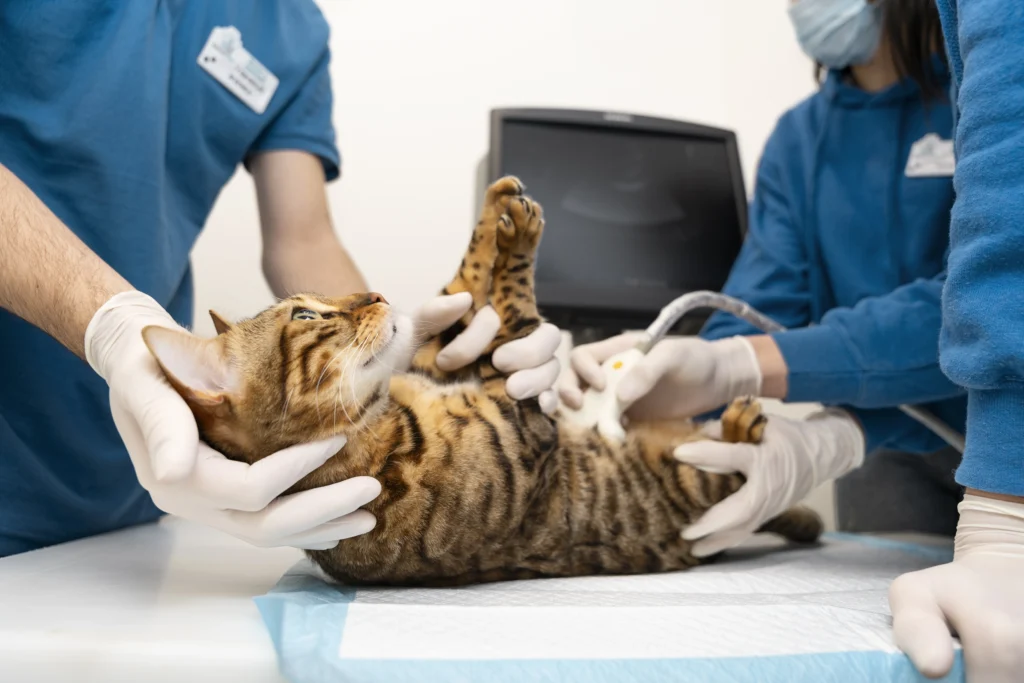
During the scan, a veterinarian or trained veterinary radiologist gently moves a handheld probe over the pet’s body after applying a special ultrasound gel. The sound waves bounce off internal structures and create images that help identify abnormalities.
The procedure is generally painless, and many pets remain calm throughout the examination. Mild sedation may only be recommended for anxious or restless animals.
What Conditions Can a Pet USG Detect?
A veterinary ultrasound can help diagnose a wide range of medical conditions affecting different organs.
1. Liver Diseases
The liver performs many vital functions, including detoxification and metabolism. Ultrasound helps evaluate:
- Enlarged liver
- Fatty liver disease
- Liver infections
- Liver cysts
- Liver tumors
- Changes in liver texture
It also helps veterinarians identify abnormalities that may not appear in routine blood tests.
2. Kidney Disorders
Kidney disease is common in both dogs and cats, especially senior pets.
An ultrasound can detect:
- Kidney stones
- Kidney infections
- Kidney cysts
- Chronic kidney disease
- Kidney enlargement
- Congenital abnormalities
Early diagnosis allows veterinarians to begin treatment before significant kidney damage occurs.
3. Bladder Problems
If your pet has difficulty urinating or blood in the urine, an ultrasound can help identify:
- Bladder stones
- Urinary tract infections
- Bladder inflammation
- Bladder tumors
- Blood clots
- Urinary obstruction
These conditions often require prompt treatment to prevent serious complications.
4. Gastrointestinal Disorders
Persistent vomiting, diarrhea, weight loss, or poor appetite may indicate digestive tract disease.
Ultrasound helps detect:
- Intestinal inflammation
- Foreign objects
- Intestinal blockage
- Thickened intestinal walls
- Gastrointestinal tumors
- Pancreatitis
This information helps veterinarians decide whether medical treatment or surgery is necessary.
5. Pancreatic Diseases
Pancreatitis is a painful condition that can become life-threatening if left untreated.
Ultrasound assists in identifying:
- Pancreatic inflammation
- Fluid accumulation
- Pancreatic masses
- Tissue abnormalities
Combined with laboratory testing, ultrasound significantly improves diagnostic accuracy.
6. Reproductive Disorders
Ultrasound plays an important role in reproductive health by detecting:
- Pregnancy
- Fetal development
- Uterine infections (Pyometra)
- Ovarian cysts
- Prostate enlargement in male dogs
- Reproductive tumors
It is commonly used to monitor both normal and high-risk pregnancies.
7. Heart Conditions
Specialized cardiac ultrasound, known as echocardiography, evaluates the heart’s structure and function.
It helps diagnose:
- Heart enlargement
- Valve disorders
- Congenital heart defects
- Heart muscle disease
- Fluid around the heart
Early diagnosis enables timely treatment and better long-term management.
8. Tumors and Internal Masses
Ultrasound is extremely useful for detecting abnormal growths in organs throughout the body.
It helps determine:
- Size of the mass
- Location
- Blood supply
- Whether nearby organs are affected
Veterinarians may also use ultrasound guidance to safely collect biopsy or fluid samples for laboratory analysis.
When Does Your Pet Need an Ultrasound?
Your veterinarian may recommend a pet ultrasound if your pet shows symptoms such as:
- Persistent vomiting
- Chronic diarrhea
- Weight loss
- Loss of appetite
- Abdominal pain
- Difficulty urinating
- Blood in urine
- Swollen abdomen
- Difficulty breathing
- Suspected pregnancy
- Abnormal blood test results
- Unexplained fever
An ultrasound often provides answers when routine examinations cannot identify the underlying problem.
Pet USG vs X-Ray: What’s the Difference?
Many pet owners wonder whether an X-ray or ultrasound is the better choice.
An X-ray is ideal for evaluating:
- Broken bones
- Fractures
- Joint problems
- Chest evaluation
- Large foreign objects
A pet ultrasound is better suited for examining:
- Liver
- Kidneys
- Spleen
- Bladder
- Pancreas
- Intestines
- Pregnancy
- Soft tissue abnormalities
In many cases, veterinarians use both imaging techniques together to obtain a complete picture of your pet’s health.
How Should You Prepare Your Pet for an Ultrasound?
Preparation depends on the area being examined, but your veterinarian may recommend:
- Fasting for 8–12 hours before the scan.
- Allowing access to water unless instructed otherwise.
- Avoiding urination before bladder examinations.
- Bringing previous medical records and laboratory reports.
For abdominal ultrasounds, a small area of fur may be clipped to improve image quality.
Is Pet USG Safe?
Yes. Ultrasound is considered one of the safest diagnostic imaging techniques available in veterinary medicine.
It:
- Does not use radiation
- Is painless
- Is non-invasive
- Can be repeated safely
- Is suitable for pets of all ages, including pregnant animals
Because it provides real-time images, veterinarians can make faster and more accurate treatment decisions.
Why Accurate Imaging Matters
Many diseases develop silently before obvious symptoms appear. By the time a pet shows visible signs of illness, internal organs may already be affected.
Early ultrasound evaluation allows veterinarians to:
- Detect diseases sooner
- Confirm a diagnosis
- Monitor treatment progress
- Plan surgery more accurately
- Improve overall treatment outcomes
When combined with pathology, blood testing, microbiology, and molecular diagnostics, ultrasound becomes an essential part of comprehensive veterinary healthcare.
Advanced Veterinary Diagnostic Services at AHPL
At Animal Health Pathology Lab (AHPL), we understand that accurate diagnosis is the foundation of effective treatment. Our advanced veterinary diagnostic services support veterinarians with reliable imaging and laboratory investigations to help identify diseases at an early stage.
From veterinary ultrasound (USG) and digital X-ray to blood tests, ECG, microbiology, parasitology, histopathology, and molecular diagnostics, our experienced team is committed to delivering timely and dependable diagnostic results that support better clinical decisions and improved patient care. Besides West Bengal we serve in Dhanbad, Agartala, Bhilai and Silchar.
Final Thoughts
A Pet Ultrasound (USG) is much more than an imaging test—it is a valuable diagnostic tool that helps veterinarians detect a wide range of health conditions quickly and accurately. From liver disease and kidney disorders to pregnancy monitoring and tumor detection, ultrasound provides detailed information that often cannot be obtained through physical examination alone.
If your veterinarian recommends an ultrasound, early testing can lead to earlier diagnosis, timely treatment, and better outcomes for your beloved companion. Investing in advanced diagnostic imaging today can make a significant difference in your pet’s long-term health and quality of life.
FAQs
Q1. What is a pet ultrasound used for?
A pet ultrasound is used to examine internal organs such as the liver, kidneys, bladder, pancreas, intestines, heart, and reproductive organs. It helps diagnose diseases, tumors, pregnancy, and internal injuries.
Q2. Is ultrasound safe for dogs and cats?
Yes. Ultrasound is a safe, painless, and non-invasive imaging procedure that does not expose pets to radiation.
Q3. How long does a pet ultrasound take?
Most veterinary ultrasound examinations take between 20 and 45 minutes, depending on the area being examined and the pet’s condition.
Q4. Does my dog need to fast before an ultrasound?
For abdominal ultrasounds, dogs and cats are usually asked to fast for 8–12 hours before the procedure. Your veterinarian will provide specific instructions.
Q5. Can ultrasound detect tumors in pets?
Yes. Ultrasound can detect abnormal masses, cysts, enlarged organs, and tumors. It can also guide biopsy procedures for further diagnosis.
Q6. What is the difference between a pet ultrasound and an X-ray?
Ultrasound is better for examining soft tissues and internal organs, while X-rays are better for evaluating bones, fractures, and some chest conditions.
Q7. Can ultrasound detect pregnancy in dogs and cats?
Yes. Ultrasound is one of the most reliable methods for confirming pregnancy and monitoring fetal development in dogs and cats.